Korean Economy
Korea’s GDP Growth in the First Quarter of 2025
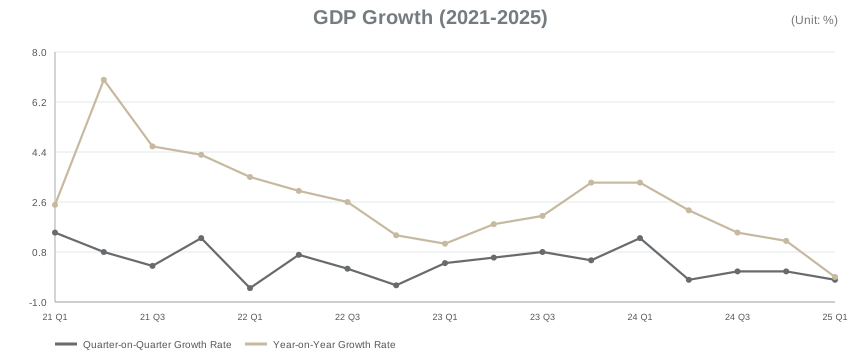
In the first quarter of 2025, Korea’s real gross domestic product (GDP) declined by 0.2% on a quarter-on-quarter basis and by 0.1% on a year-on-year basis.
Private consumption slipped by 0.1% quarter on quarter, weighed down by subdued spending on services, particularly in entertainment, cultural activities, and healthcare. Government consumption also fell by 0.1%, mainly due to reduced expenditures under the national health insurance program. Construction investment declined by 3.2%, reflecting a marked slowdown in building activity, while facility investment dropped by 2.1%, led by weaker capital spending on machinery, especially semiconductor manufacturing equipment. On the external side, exports contracted by 1.1% amid softer demand for chemical products, machinery, and equipment, while imports fell by 2.0%, primarily due to lower inflows of energy-related goods, including crude oil and natural gas.
< Quarterly Economic Growth > (Unit: %)
*Figures in ( ) refer to year-on-year growth rates.
(Source: Bank of Korea, April 24, 2025)
Meanwhile, Korea’s real gross domestic income (GDI) contracted by 0.4% from the previous quarter and by 0.1% year on year, falling short of the GDP growth figure of -0.2%. As of end-March 2025, the country’s foreign exchange reserves stood at USD 409.21 billion, down USD 1.79 billion from the prior month.
Korean Economy
Benchmark Interest Rate Outlook for 2025
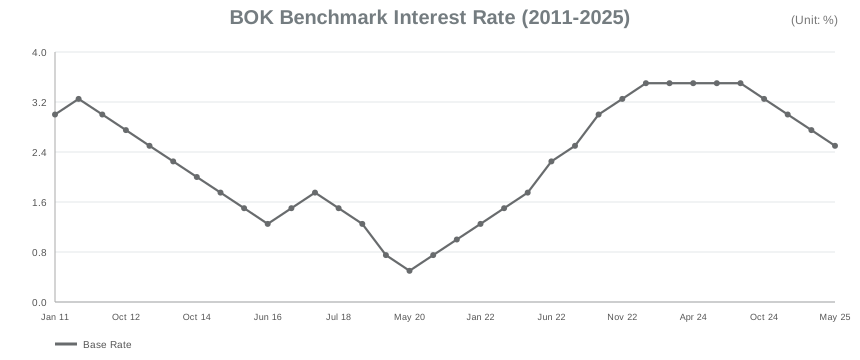
At its meeting on May 29, 2025, the Bank of Korea’s Monetary Policy Board decided to lower the base rate from 2.75% to 2.5%. This decision follows a series of rate cuts, from 3.5% to 3.25% in October 2024, to 3.00% in November, and then to 2.75% in February 2025. The latest rate cut reflects the Board’s expectations that economic growth will decline while inflation remains broadly stable.
Amid continued price stability, downside risks to growth have increased due to sluggish economic performance in the first quarter and worsening global trade conditions. Given the downward movement in economic growth and significant uncertainty surrounding the outlook, including possible changes in United States tariff policy, along with elevated exchange rate volatility, the Board judged it appropriate to cut the rate while carefully assessing changes in both domestic and external conditions.
Looking ahead, the Monetary Policy Board will continue to monitor the growth trajectory while ensuring that inflation remains stable around the target over the medium term, and at the same time give due consideration to financial stability in the conduct of monetary policy. The monetary policy stance will continue to lean toward easing, aiming to alleviate downside risks to growth. Any further rate cuts will be carefully determined based on changes in domestic and external policy conditions, with close monitoring of inflation, household debt, and exchange rate trends.
Korean Economy
Economic Landscape for 2025
Korea’s economy is projected to fall short of earlier expectations, as the prolonged drag from political uncertainty continues to delay a recovery in economic sentiment, while United States tariff measures have proven more forceful and expansive than anticipated. In the first quarter of 2025, heightened domestic and external uncertainties weighed heavily on confidence, and a series of temporary disruptions, including large-scale wildfires, construction delays at selected sites, and deferred demand for high performance semiconductors such as HBM, further contributed to a broad-based weakening in both domestic demand and exports.
The consumer price inflation rate is expected to align broadly with the Bank of Korea’s February projection of 1.9%, as downward pressures stemming from weakening economic momentum and declining oil prices are partially offset by upward factors such as the elevated exchange rate. Headline inflation has fluctuated around the 2% level, while core inflation has remained stable in the upper 1% range.
The current account surplus for the year is now expected to fail to meet the earlier projection of USD 75 billion. In the first quarter, goods exports underperformed expectations, but the current account balance still exceeded forecasts, owing to a steeper than expected decline in imports, particularly of raw materials. As the year progresses, the surplus is likely to narrow, primarily due to a worsening goods balance amid escalating U.S. tariff measures.
Global economic momentum is projected to moderate, as uncertainty surrounding U.S. trade policy grows both in scale and intensity. In the United States, broader than expected tariff measures are weighing on sentiment and heightening downside risks to growth. The euro area is expected to sustain modest expansion, while China faces a pronounced external shock from rising tensions with the United States, partly cushioned by policy efforts to stimulate consumption and investment.